
Number of Return
50 TimesROI
$ 25Total Unit
500Maturity
1000000 DaysUnite Price
$ 25Return Period
100 HourCapital Back
NoInvestment Last Date
05 May 2027


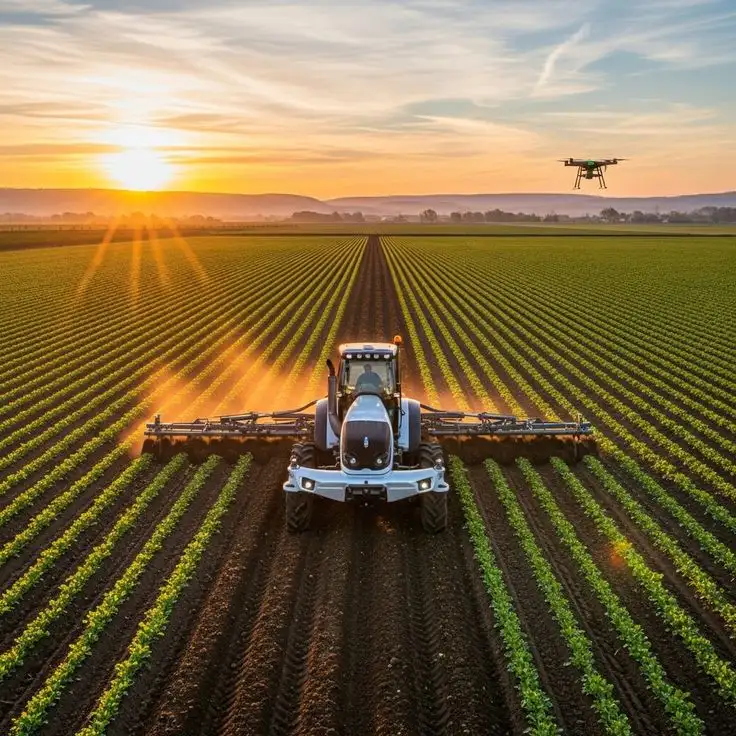
Western Desert, near the northwest coast
Number of Return
50 TimesROI
$ 25Total Unit
500Maturity
1000000 DaysUnite Price
$ 25Return Period
100 HourCapital Back
NoInvestment Last Date
05 May 2027You are Sponsoring:
Available Unit
The New Delta Project is one of Egypt???s mega agricultural projects aimed at reclaiming new lands in the Western Desert, near the northwest coast. Its total area, distributed across several sub-projects, ranges between 2.2 and 2.8 million feddans, adding about 15% of new cultivated land to Egypt. The project is designed to enhance food security.
In 2003, Kuwait approved funding for the West Delta Studies Project at a cost of $2 million.
In 2006, the Center for Environment and Development for the Arab Region and Europe (CEDARE), in cooperation with the World Bank, prepared a special report surveying investors??? opinions in the West Delta area about constructing a new canal to deliver about 6.2 billion cubic meters of Nile water annually. About 88% of investors in the region agreed to finance the project, with costs to be recovered based on the area irrigated or the amount of water consumed, along with operational and maintenance costs.
The survey was based on three components:
Improving irrigation in 255,000 feddans east and west of the Cairo???Alexandria Desert Road, south of the Rest House.
Enhancing irrigation in 500,000 feddans northwest of the Delta (in Nobariya, Nasr, Bustan, Bahig, Mariout, and Hammam regions).
Adding 100,000???200,000 feddans of newly reclaimed land along the Wadi El-Natrun???Alamein Road.
In 2006, the International Fund for Agricultural Development (IFAD) published Egypt???s country strategic opportunities paper, which included reference to the West Delta Project.
In 2007, the World Bank approved financing of $175 million for reclaiming 255,000 feddans in the West Delta.
Also in 2007, the Ministry of Water Resources and Irrigation published a draft of the Environmental and Social Impact Assessment and the Management Framework Plan for the West Delta water conservation and irrigation development project, in cooperation with the World Bank.
In 2008, Egypt, the World Bank, and the French Development Agency signed agreements to finance a mega project in the West Delta to reclaim 170,000 new feddans in Sadat City (Menoufia Governorate) and along the Wadi El-Natrun???Alamein Road, in addition to improving irrigation systems over 260,000 feddans along the Cairo???Alexandria Desert Road.
In 2012, a major World Bank-funded research project was launched to forecast groundwater changes across Egypt and Africa. It involved the National Authority for Remote Sensing and Space Sciences, the Ministries of Irrigation and Agriculture, the National Research Institute of Astronomy and Geophysics, and NASA. The 5-year project studied the Nubian Sandstone Aquifer and revealed large groundwater availability in northern and central Western Desert, but scarcity in the south.
In 2016, the National Service Projects Organization contracted the Remote Sensing Authority, led by Dr. Alaa El-Nahry, to examine soil and water resources along the newly developed Dabaa Axis. Studies confirmed millions of feddans suitable for cultivation with non-saline soils and abundant fresh groundwater close to the surface.
Initial phase: reclamation of 1 million feddans west of the Delta along the Dabaa Axis, with future expansion westward. The project relies on treated water and groundwater.
Area: 64,000 feddans.
Irrigation sources:
46,000 feddans from groundwater.
18,000 feddans from treated water supplied by two plants in 6th of October City.
Infrastructure: two pipelines (12 km), two reservoirs (350,000 m??), and three pumping stations with 210,000 m??/day capacity.
Includes agricultural-industrial urban communities.
Managed by the Future of Egypt Authority for Sustainable Development.
Area: initially 500,000 feddans, expandable to 1.05 million feddans.
Location: spans four governorates (Giza, Matrouh, Beheira, Fayoum), extending 120 km along the Dabaa Axis with a depth of 60???70 km, just 30 minutes from 6th of October City.
Cost: 8 billion EGP, covering 500 km of internal roads, wells, two power stations (350 MW), and three industrial zones.
Area: 500,000 feddans.
Location: south of the Dabaa Axis, west of the ???Future of Egypt??? project, near the old Delta and transport networks.
Irrigation: from the northern source (New Hammam Canal).
Length: 170 km, transferring 7.5 million m??/day.
Path: 114 km (94 km open canals + 20 km pipelines totaling 200 km).
Purpose: divert agricultural drainage water from old Delta drains (Omoum, West Nubariya, Qalaa, Edku, Borseeg, Abu Qir) to the Hammam treatment plant for reuse instead of discharge into the Mediterranean.
Key facilities:
8 steel pipelines (2,500 mm).
6 HDPE pipelines (3,000 mm).
10 steel pipelines (2,200 mm).
2 HDPE pipelines (2,500 mm).
13 pumping stations.
81 engineering structures (canal intakes, siphons, aqueducts, bridges).
Hammam Treatment Plant: largest agricultural wastewater treatment plant in the world (3 units, each 2.5 million m??/day; total 7.5 million m??/day).
Length: 41.3 km, transferring 10 million m??/day from the Rosetta branch of the Nile.
Path: 17 km open canals + 24.3 km pipelines.
Includes 6 pumping stations and 13 engineering structures (culverts, weirs, bridges, regulators).
Southern Plant: 100,000 m??/day.
Western Plant: 250,000 m??/day (expandable by 50,000 m??/day).
Supplies 350,000 m??/day to the ???Egypt???s Paradise??? project.
Studies led by Dr. Alaa El-Nahry revealed a groundwater reservoir in the Western Desert capable of irrigating 7 million feddans.
Two main aquifers:
Upper aquifer (120 m thick, salinity 400???1000 ppm, renewable from the Nile).
Maghra aquifer beneath it (250???900 m thick, salinity 100???3000 ppm).
Together, they provide water layers 370???1020 m thick.
Additionally, the deep Nubian Sandstone Aquifer (>2000 m depth) supplies water through geological faults.
The Future of Egypt Authority for Sustainable Development signed a cooperation protocol with Famsun (China) to build grain silos in the project???s industrial zone along the Dabaa Axis.
Initial storage capacity: 120,000 tons, expandable to 500,000 tons.


Different term invest made your money secure and choice the best plan for your future asset
Total Asset Raised
Properties Funded
Target Net IRR
Total Investor

The??Minya and Beni Suef Project??reclaims??62,000 feddans??to cultivate key crops, build an??EGP 70 billion agro-industrial hub, and create jobs, boosting??food security and self-sufficiency??in Upper Egypt.

The??New Delta Project??is Egypt???s largest land reclamation plan, targeting??2.2???2.8 million feddans??in the Western Desert using surface and groundwater, advanced irrigation, and agro-industrial zones???adding??15% new farmland??to secure food supply and boost exports.
 your Money